Lesson 16

Mary had a little lamb

玛丽有一头小羔羊

0:00
0:00

默认只呈现英文正文,帮助你先专注进入语感;中文、词汇与讲解在需要时再展开。

课文

以阅读为中心

English-first · 逐句朗读

  1. 01

    Mary and her husband Dimitri lived in the tiny village of Perachora in southern Greece.

  2. 02

    One of Mary's prize possessions was a little white lamb which her husband had given her.

  3. 03

    She kept it tied to a tree in a field during the day and went to fetch it every evening.

  4. 04

    One evening, however, the lamb was missing.

  5. 05

    The rope had been cut, so it was obvious that the lamb had been stolen.

  6. 06

    When Dimitri came in from the fields, his wife told him what had happened.

  7. 07

    Dimitri at once set out to find the thief.

  8. 08

    He knew it would not prove difficult in such a small village.

  9. 09

    After telling several of his friends about the theft, Dimitri found out that his neighbour, Aleko, had suddenly acquired a new lamb.

  10. 10

    Dimitri immediately went to Aleko's house and angrily accused him of stealing the lamb.

  11. 11

    He told him he had better return it or he would call the police.

  12. 12

    Aleko denied taking it and led Dimitri into his backyard.

  13. 13

    It was true that he had just bought a lamb, he explained, but his lamb was black.

  14. 14

    Ashamed of having acted so rashly, Dimitri apologized to Aleko for having accused him.

  15. 15

    While they were talking it began to rain and Dimitri stayed in Aleko's house until the rain stopped.

  16. 16

    When he went outside half an hour later, he was astonished to find that the little black lamb was almost white.

  17. 17

    Its wool, which had been dyed black, had been washed clean by the rain!

词汇

阅读之后,整理词汇

从课文回到词义、搭配与例句。

词汇讲解

  • prize [praɪz] adj. 心爱的,受珍视的

prize / prized adj. 心爱的

  • One of Mary's prize possessions was a little white lamb which her husband had given her.

  • The idea never appealed to me very much, but one day, after a heavy shower, I happened to be walking in my garden when I noticed a huge number of snails taking a stroll on some of my prize plants.

valued / treasured / cherished adj. (对某人有特殊意义,本身未必值钱)

prize / value / treasure / cherish vt. 珍爱,珍视

  • I’ll prize / value / treasure / cherish our friendship for ever.

  • This is a lesson you’re going to prize / value / treasure / cherish.

valuable / priceless / precious adj. 宝贵的,价值连城的 (强调本身很值钱)

precious stone 宝石

  • It was very old and precious even then.

  • tie [taɪ] v. 拴,系

  • tie a tie 系领带

tie … to … 把…绑(拴)住

  • Tie the horse to a tree.

  • The thief was tied / bound(bind) / chained(chain) to a tree.

  • theft [θeft] n. 盗窃

theft n. 盗窃

thief n. 贼)

  • He is guilty of theft.

burglary n. 入户行窃

burglar n. 梁上君子

  • Burglar alarms going off at any time of the day or night serve only to annoy passers-by and actually assist burglars to burgle.

pickpocket n. 扒手

shoplifter n. 商店扒手

steal sth. from sb. 从某人偷窃

rob sb. of sth. 抢窃某人

help oneself to sth. 偷/抢某事

  • One of the thieves was struck by a heavy statue, but he was too busy helping himself to diamonds to notice any pain.

poach vt. 水煮;偷猎;窃取;把…踏成泥浆 vi. 偷猎;侵犯;剽窃

  • Deer have been poached here for years.

embezzle vt. 盗用;挪用;贪污

  • The official was charged with embezzling enormous government funds.

  • accuse [ə'kju:z] v. 指控;(愤怒地)指责

accuse sb. of sth. 指控/指责某人

  • I accused him of stealing my sheep.

  • Dimitri immediately went to Aleko's house and angrily accused him of stealing the lamb.

  • They may even accuse them of disloyalty, or make some spiteful remark about the friends' parents.

criticize sb. for sth. 因为某事指责某人

  • He was criticized for his delay in dealing with the matter.

censure sb. for sth. 严厉的批评某人

  • Ministers were censured for their lack of decisiveness during the crisis.

scold sb. for sth. (大人对小孩) 批评某人

  • His mother scolded him for breaking her favorite vase.

blame sb. for sth. 指责某人(强调责任)

blame sth. on sb. 指责某人 (强调责任)

  • They blamed George for the failure.

  • They blamed the failure on George.

reprimand sb. for sth. (上级对下降) 批评某人

  • I was reprimanded by my manager for being late.

  • Recognizing who the customer was, the manager was most apologetic and reprimanded the assistant severely.

condemn A for 因为…谴责

condemn as B 谴责…是

  • The movie was condemned for its sexism.

  • The terrorist attack was condemned as an act of barbarism and cowardice.

  • deny [dɪ'naɪ] v. 否认

deny + sth. / doing / that 否定(做)某事

  • He denied the charge. / knowing about it./ that he had stolen the sheep.

admit / acknowledge + sth. / doing / that 承认某事

  • He admitted / acknowledged the charge. / knowing about it. / that he had stolen the sheep.

  • ashamed [ə'ʃeɪmd] adj. 惭愧的,羞耻的

be ashamed of … 对…羞愧的

  • You should be ashamed of your behavior.

be ashamed to do 耻于做某事

  • Their behavior makes me ashamed to be Chinese!

shame vt. 使丢脸,使羞愧

disgrace vt. 使……失宠;给……丢脸;使……蒙受耻辱;贬黜

humiliate vt. 羞辱;使…丢脸;耻辱

bring shame / disgrace on …

  • His behavior shamed / disgraced / humiliated / brought shame on / brought disgrace on his family.

shame n. 羞耻;可惜

  • Shame on you!

  • What a shame!

  • —John is sick and can’t come to class.

  • —What a shame!

  • 听力真题

A) The man will be sorry later.

B) The camera should be thrown away.

C) It's too bad the camera didn't work.

D) Sarah was quite embarrassed.

M: Just as Sarah was opening the present I realized the camera wasn’t working.

W: What a shame!

Q: What does the woman mean?

Answer: (C) It's too bad the camera didn't work.

put sb. / sth. to shame 使……相形见绌

  • They have all been put to shame by a boy who, while playing truant, travelled 1,600 miles.

  • apologize [ə'pɒlədʒaɪz] v. 道歉

apologize to sb. for sth. 因某事对某人道歉

  • I apologized to him for being late.

make an apology to sb. for sth. 因某事对某人道歉

say sorry to sb. for sth. 因某事对某人道歉

be apologetic about sth. 因某事对某人道歉

  • He was apologetic about his late arrival.

  • Recognizing who the customer was, the manager was most apologetic and reprimanded the assistant severely.

课文解析

把理解留在阅读之后

按需查看语法、表达与课后练习。

课文讲解

Mary had a little lamb 儿歌

Mary and her husband Dimitri lived in the tiny village of Perachora in southern Greece.

知识点(一)

in southern Greece = in the south of Greece

southern … = the south of …

northern … = the north of …

eastern … = the east of …

western … = the west of …

northeastern … = the northeast of …

northwestern … = the northwest of …

southeastern … = the southeast of …

southwestern … = the southwest of …

  • She comes from western China. 她来自中国西部。

  • She comes from the west of China. 她来自中国西部。

  • 造句:Jane 和父母亲住在中国东北一个叫丹东的小城市里。

  • Jane and her parents live in the tiny town of Dandong in northeastern China.

  • Jane and her parents live in the tiny town of Dandong in the northeast of China. Greece

知识点(二)

Greek 希腊

Greek mythology 希腊神话

  • It’s all Greek to me. 我完全不懂

One of Mary's prize possessions was a little white lamb which her husband had given her.

prize: prized / treasured / valued / cherished

valuable / priceless / precious

语法:形容词的顺序

大小 形状 年龄 新旧 颜色 国际 材料 用途 + 中心名词

  • 举例:一张新的很沉的黑色的中国式的圆形的大木餐桌

  • a heavy big round new black Chinese wooden dining table

  • 课文写法替换:

… a little white lamb which had been a present from her husband.

  • 课后习题讲解:

5 - was a little white lamb which had been ___D___ from her husband. (11.2-3)

(a) present (b) presented (c) presenting (d) a present

She kept it tied to a tree in a field during the day and went to fetch it every evening.

keep + 宾语 + 宾补 (adj. / 分词 / 介词短语)

  • The coat will keep you warm.

  • He kept the fire burning.

  • It’s rude to keep people waiting.

  • Keep your nose out of my affairs!

bring 带过来

  • He brought a friend to my home.

take 带走

  • Don’t forget to take an umbrella.

fetch (英式)/ get(没事) 到那去再拿回来来

  • Please fetch / get me some coffee. Go fetch!

One evening, however the lamb was missing.

表达“丢了”

be missing / be lost / disappear (without trace)

  • …, the lamb was lost.

  • …, the lamb disappeared (without trace). 消失的无影无踪

The rope had been cut, so it was obvious that the lamb had been stolen.

表达“显然”

…, so it was clear / obvious / apparent / that the lamb had been stolen.

…, so clearly / obviously / apparently the lamb had been stolen.

  • All the things I had packed so carefully were soon in a dreadful mess.

  • 造句:所有我仔细放在包里的东西都乱成了一团,所以显然珠宝是被偷了。

  • All the things I had packed so carefully were in a dreadful mess, so it was clear / obvious / apparent that the jewels had been stolen.

  • 造句:所有我仔细放在包里的东西都乱成了一团,所以显然珠宝是被偷了。

  • All the things I had packed so carefully were in a dreadful mess, so clearly / obviously / apparently the jewels had been stolen.

When Dimitri came in from the fields, his wife told him what had happened. Dimitri at once set out to find the thief.

set out to do(带着目的)开始做某事

  • The journalist immediately set out to obtain these important facts, but he took a long time to send them.

表达“开始做某事”

begin to do / doing

start to do / doing

come to do

  • Future historians will be in a unique position when they come to record the history of our own times.

  • When you come to think about it, there are only four ways you can deal with rubbish: dump it, burn it, turn it into something you can use again, attempt to produce less of it.

get to do / to doing

  • I get to like her over the months.

  • He’s got to thinking it was all his fault.

  • They had a definite meaning, for they were as near as early man could get to writing.

embark on sth.

  • Armed with the right tools and materials, newlyweds gaily embark on the task of decorating their own homes.

He knew it would not prove difficult in such a small village.

注意位置

such a small village

so small a village

  • such an interesting book

  • so interesting a book

只能用“so”,不能用用“such”

many / much / few / little(little “少”是只用so)

  • so many people

  • so much time

  • so few students

  • so little money

  • so little a boy

  • such a little boy 小(little “少”是只用so)

After telling several of his friends about the theft, Dimitri found out that his neighbour, Aleko, had suddenly acquired a new lamb.

知识点(一)

tell sb. (about) sth. 告诉某人某事

report / relate / recount sth. to sb. 告诉某人某事

  • After reporting / relating / recounting the theft to several of his friends, …

  • We know instinctively, just as beekeepers with their bees, that misfortune might overtake us if the important events of our lives were not related to it.

  • 课后习题讲解:

10 After ____B___ the theft to several of his friends ... (1.9)

(a) telling (b) reporting (c) expressing (d) counting

知识点(二)

Dimitri found out (副词)that his neighbour

  • The experts were now fully convinced that the animal was a puma, but where had it come from?

that 从句前省略介词,

特殊情况:看作复合连词

in that … except that … but that …

Dimitri immediately went to Aleko's house and angrily accused him of stealing the lamb.

He told him he had better return it or he would call the police.

知识点(一)

had better do sth. or (else) ... (威胁语气)最好…否则…

  • You’d better go out at once or (else) I’ll throw you out of the window.

do sth. before … (威胁语气)

  • Get away from here before I call the police.

otherwise 否则…

  • Put on a heavy coat, otherwise / or (else) you’ll catch a cold.

知识点(二)

had better do sth. 表示建议(注意场合,不用于下对上)

  • You’d better pay him a visit tomorrow.

You might as well do ... 表示建议(委婉场合)

  • It might be better to do ...

I suggest you do ... 表示建议(委婉场合)

知识点(三)

call the police 报警

go to the police 报警

  • At first, she decided to go to the police, but fearing that she would never see Rastus again―the letter had made that quite clear―she changed her mind.

inform the police 报警

  • Mrs. Ramsy was not to inform the police and had to pay £1,000.

Aleko denied taking it and led Dimitri into his backyard.

deny + sth. / doing / that 否认

  • Aleko denied the accusation / charge. 否认指责,名词形式

  • Aleko denied that he had taken it. 否认指责,从句形式

admit / acknowledge + sth. / doing / that 承认

lead sb. 领某人去某地

show sb. 领某人去某地

  • George showed me to the guestroom which, he said, was rarely used.

usher sb. 领某人去某地

  • The secretary ushered me into his office.

It was true that he had just bought a lamb, he explained, but his lamb was black.

It is true that ..., but ... 诚然…但… (先让步,再转折)

  • 造句:诚然中国还是一个发展中国家,但是她却充满了潜力。

  • It is true that China is still a developing country, but she is full of potential.

  • It is true that during their explorations they often faced difficulties and dangers of the most perilous nature, equipped in a manner which would make a modern climber shudder at the thought, but they did not go out of their way to court such excitement.

相似搭配:诚然…但… (先让步,再转折)

It is true that ..., but ...

Admittedly, ..., but ...

Granted, …, but …

  • Admittedly, I could have tried harder, but I still don't think all this criticism is fair.

  • Granted, he doesn't look too bad for his age, but I don't fancy him.

  • Granted, a snobbery of camping itself, based upon equipment and techniques, already exists; but it is of a kind that, if he meets it, he can readily understand and deal with.

让步之后,but后的表达:

It is true that / Admittedly, / Granted, ...,

but that is not to say that ... 这并不少说

but it does not follow that ...这不一定得出这样的结论

but it does not necessarily mean that ... 这不对意味着

but there is no guarantee that … 不能保证

  • 造句:确实很多大学生选择继续读研究生 (pursue their graduate studies),但这并不意味着他们都想做学者。

  • It is true that many college students choose to pursue their graduate studies, but it does not necessarily mean that they want to be scholars.

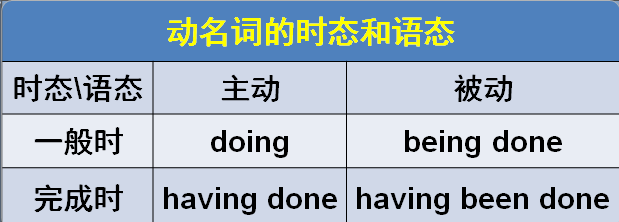
Ashamed of having acted so rashly, Dimitri apologized to Aleko for having accused him.

语法: Being ashamed of,非谓语当原因状语,being省略

be ashamed of ... 对…感到羞愧

  • Being ashamed of having acted so rashly, Dimitri apologized to Aleko for having accused him.

  • The gaoler looked on eagerly, (being) anxious to see if his fellow actor had at last learnt his lines.

  • He used to sleep during the day and work at night, (being) quite unaware of the fact that he had become the ghost of Endley.

  • (Being) Tired of sleeping on the floor, a young man in Teheran saved up for years to buy a real bed.

语法复习:
.

apologize to sb. for sth. 向某人道歉

  • Dimitri made an apology to Aleko for having accused him. 名词形式

  • Dimitri said sorry to Aleko for having accused him.

  • 造句:对自己如此不小心 (inattentively) 而感到不好意思, 我为打碎了 Mary 最喜欢的花瓶而向她道歉。

  • Ashamed of having acted so inattentively, I apologized to Mary for having broken her favorite vase.

While they were talking it began to rain and Dimitri stayed in Aleko's house until the rain stopped.

When he went outside half an hour later, he was astonished to find that the little black lamb was almost white.

half an hour  半小时

an hour and a half 一个半小时

表“惊讶”

be surprised / amazed / astonished / astounded + to find that / to learn that etc.

  • When the archaeologists reconstructed the fragments, they were amazed to find that the goddess turned out to be a very modern-looking woman.

  • A short time ago, villagers were astonished to learn that the ghost of Endley had died.

Its wool, which had been dyed black, had been washed clean by the rain!

dye sth. black / blue / blonde etc. 把…染成…颜色

  • Jane has dyed her hair blonde.

…clean by the rain… clean 是主语补足语,修饰羊毛

课后练习