Lesson 15

Fifty pence worth of trouble

五十便士的麻烦

0:00
0:00

默认只呈现英文正文,帮助你先专注进入语感;中文、词汇与讲解在需要时再展开。

课文

以阅读为中心

English-first · 逐句朗读

  1. 01

    Children always appreciate small gifts of money.

  2. 02

    Mum or dad, of course, provide a regular supply of pocket money, but uncles and aunts are always a source of extra income.

  3. 03

    With some children, small sums go a long way.

  4. 04

    If fifty pence pieces are not exchanged for sweets, they rattle for months inside money boxes.

  5. 05

    Only very thrifty children manage to fill up a money box.

  6. 06

    For most of them, fifty pence is a small price to pay for a nice big bar of chocolate.

  7. 07

    My nephew, George, has a money box but it is always empty.

  8. 08

    Very few of the fifty pence pieces and pound coins I have given him have found their way there.

  9. 09

    I gave him fifty pence yesterday and advised him to save it.

  10. 10

    Instead he bought himself fifty pence worth of trouble.

  11. 11

    On his way to the sweet shop, he dropped his fifty pence and it bounced along the pavement and then disappeared down a drain.

  12. 12

    George took off his jacket, rolled up his sleeves and pushed his right arm through the drain cover.

  13. 13

    He could not find his fifty pence piece anywhere, and what is more, he could not get his arm out.

  14. 14

    A crowd of people gathered round him and a lady rubbed his arm with soap and butter, but George was firmly stuck.

  15. 15

    The fire brigade was called and two fire fighters freed George using a special type of grease.

  16. 16

    George was not too upset by his experience because the lady who owns the sweet shop heard about his troubles and rewarded him with a large box of chocolates.

词汇

阅读之后,整理词汇

从课文回到词义、搭配与例句。

词汇讲解

  • appreciate [ə'pri:ʃɪeɪt] v. 欣赏;感激

appreciate music 欣赏

appreciate wine 欣赏

I appreciate your help. 感激

I appreciate it. 感激

be appreciative of … 感激的,感谢的

  • I’m most appreciative of your concern for my health.

in appreciation of … 以感激…

  • I sent him a gift in appreciation of his help.

表达“感激的,感谢的”

I’m thankful / grateful to you for your help.

I’m much obliged to you for your advice.

I’m deeply indebted to you for your encouragement.

I owe you (one).

I owe you a lot.

  • I owe you a big favor. 欠一个大人情

  • pocket money ['pɒkɪt 'mʌnɪ] n. 零用钱,零花钱

pocket money 给小孩的零用钱

beer money 给男人的零用钱

pick one’s pocket (从口袋里)偷某人的钱

pickpocket n. 扒手

money burns a hole in one’s pocket (习语) 留不住钱

  • 听力真题

A) He doesn't have enough money to buy a printer now.

B) He's not sure how much a printer costs.

C) He'll buy a computer later this week.

D) He lost the money he was saving.

W: Have you saved enough to buy that new printer for your computer yet?

M: You know money seems to be burning a hole in my pocket lately. Maybe next month.

Q: What does the man mean?

Answer: (A) He doesn't have enough money to buy a printer now.

  • rattle ['rætl] v. & n. 硬物碰撞时当当作响

  • The coins rattled in the money box when he shook it.

tinkle n. 叮当声 vt. 使发清脆的声响 vi. 发叮当声

  • I rang the bell and heard it tinkle inside.

  • the tinkle of glass and china

clatter n. 哗啦声;嘈杂的谈笑声;咔嗒声 vi. 发出哗啦声;喧闹的谈笑 vt. 使卡搭卡搭的响

  • the clatter of hooves 马蹄声

chime n. 钟声;一套发谐音的钟;和谐 vi. 鸣响;和谐 vt. 打钟报时;敲出和谐的声音

  • The church bells chimed in the square.

slam / bang

  • Don’t slam / bang the door.

  • The door shut with a slam / bang.

  • thrifty ['θrɪfti] adj. 节俭的

  • a thrifty housewife

frugal adj. 节俭的;朴素的;花钱少的

economical adj. 经济的;节约的;合算的

miserly adj. 吝啬的;贪婪的

stingy adj. 吝啬的,小气的;有刺的;缺乏的

wasteful adj. 浪费的,不经济的;奢侈的

extravagant adj. 奢侈的;浪费的;过度的;放纵的

  • …, he was so extravagant that he was always in debt.

save on ... 节约…

economize on ... 节约…

  • save on water / electricity 节约用水/用电

  • economize on water / electricity 节约用水/用电

  • nephew ['nefju:] n. 侄子;外甥

nephew

niece n. 外甥女,侄女

cousin n. 堂兄弟姊妹;表兄弟姊妹

sibling n. 兄弟姊妹;民族成员

sibling rivalry 同胞争宠;同胞竞争

  • He has two siblings, a brother and a sister.

aunt n. 阿姨;姑妈;伯母;舅妈

uncle n. 叔叔;伯父;伯伯;舅父;姨丈;姑父

parental adj. 父母亲的,父母的;亲代的,亲本的

maternal adj. 母亲的;母性的;母系的;母体遗传的

paternal adj. 父亲的;得自父亲的;父亲般的

  • parental / maternal / paternal affection

filial adj. 孝顺的;子女的,当做子女的

filial duty na. 做女儿的义务;做儿子的义务

filial piety na. 孝道;孝顺

  • bounce [baʊns] v. & n. 弹起,弹跳

bounce = bound v.& n. (同义)

  • The ball bounced when it hit the ground.

  • She came bouncing in and told me the good news.

  • That’s the way the ball bounces. 本来就是这样的

by leaps and bounds: (习语)very quickly

  • Her health is improving by leaps and bounds.

  • stick [stɪk]v. 卡住;粘住;伸出

  • The drawer sticks badly.

表达“粘到…”

stick to …

cling to …

adhere to …

  • I’ll stick to my job until I find a better one.

stick your tongue. 深处舌头

stick’em up! 举起手来

  • Freeze(不许动)! Stick’em up! Your money or your life? 回答:Definitely my life!

课文解析

把理解留在阅读之后

按需查看语法、表达与课后练习。

课文讲解

Fifty pence worth of trouble

短语复习:值多少钱

money + worth of + sth.

  • They had got away with thousands of pounds worth of diamonds. Ross: Well, how was the date?

  • Rachel: Well I’m alone and I just bought fifteen dollars worth of candy bars, what do you think?

  • I just bought 50 yuan worth of groceries.

Children always appreciate small gifts of money.

课文中表达“零花钱”同义替换

Children always appreciate small gifts of money. Mum or dad, of course, provides a regular supply of pocket money, but uncles and aunts are always a source of extra income.

Mum or dad, of course, provides a regular supply of pocket money, but uncles and aunts are always a source of extra income.

知识点(一)

动词变名词的正式表达:

… provides a regular supply of pocket money …

greatly contribute to … 对…做出贡献

> make great contributions to …

specially emphasize / stress 特别强调

 > lay / put special emphasis / stress on …

fully understand … 完全了解…

 > have a full understanding of …

carefully consider … 仔细考虑某事

 > give careful consideration to …

strongly object to … 强烈反对某事

 > have a strong objection to …

  • 造句:这份报告特别强调了必须要吃充足的新鲜蔬菜和水果。

  • The report specially stresses that it is necessary to eat plenty of fresh fruit and vegetables. (普通表达)

  • The report lays special stress on the necessity of consuming adequate fresh fruit and vegetables. (高级表达)

知识点(二)

source n. 来源;水源;原始资料

  • the source of the Yangtze River

resource n. 资源,财力;办法;智谋

  • natural resources 自然资源

  • mineral resources 矿物资源

origin n. 起源;原点;出身;开端

  • the origin of mankind 人类起源

  • the origin of the universe 宇宙起源

originate in … 起源于…

stem from … 起源于…

have its roots in … 起源于…

  • Printing originates in / stems from / has its roots in China.

  • However, a new type of humour, which stems largely from America, has recently come into fashion.

  • 造句:学习英语对我来说总是一种乐趣。

  • Learning English is always a source of pleasure for me.

With some children, small sums go a long way.

with ... / for ... / to ... 对某人来说

  • For most of them, 50 pence is a small price to pay for a nice big bar of chocolate.

go a long way 延续很久

  • The battery can go a long way.

go a long way towards … 在某个方面有很大的帮助

  • The book will go a long way towards solving your problems.

come a long way 取得了很大的进步

  • 托福听力真题

(A)She traveled a long distance to attend the exhibit.

(B)She likes to paint a variety of things.

(C)She thinks her painting has improved.

(D)She's glad the man saw her students' paintings.

M: I saw some of your paintings at the student art exhibit. They are great.

W: Thanks. I feel as though I’ve come a long way.

Q: What does the woman mean?

Answer: (C) She thinks her painting has improved.

If 50 pence pieces are not exchanged for sweets, they rattle for months inside money boxes.

知识点(一)

piece: coin 硬币

  • Very few of the fifty pence pieces and pound coins I have given him have found their way there.

知识点(二)

exchange A for B 把A换成B,兑换

  • Where can I exchange U.S. dollars for British pounds?

exchange rate 汇率

change A into B 把A变成B

  • The witch changed the prince into a frog.

知识点(三)

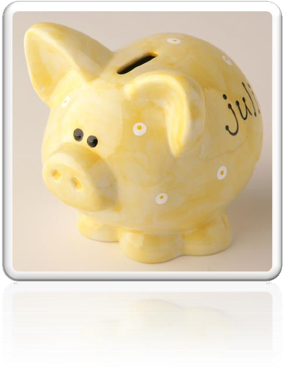
money boxes 存钱罐

piggy-bank 存钱罐

D:
ce3 ppt图片库yryrtyrty.bmp

Only very thrifty children manage to fill up a money box.

fill up sth. 把……装满, up是副词

Fill her up!

I need a full tank. 把邮箱装满

fill in / out the form 填表格

For most of them, 50 pence is a small price to pay for a nice big bar of chocolate.

be a small price to pay for sth. 对于提…来说算不了什么

  • 造句: 损失点钱对于提高地位来说算不了什么。

  • The loss of money is a small price to pay for the rise in status.

be a high price to pay for sth. 对于提…来说价格太高/不值得

  • 造句:为了成功而牺牲健康是不值得的。

  • The sacrifice of health is a high price to pay for success.

a nice big bar of chocolate

语法:形容词的顺序

大小 形状 年龄 新旧 颜色 国际 材料 用途 + 中心名词

  • 举例:一张新的很沉的黑色的中国式的圆形的大木餐桌

  • a heavy big round new black Chinese wooden dining table

注意:名词前有量词,形容词放在量词前

  • a nice cup of tea 一杯好茶

  • a beautiful stretch of field 一片美丽的田野

  • a stagnant pool of water 一潭死水

第一段写作总结:长句为主,短句作为铺垫

  • Children always appreciate small gifts of money. Mum or dad, of course, provides a regular supply of pocket money, but uncles and aunts are always a source of extra income. With some children, small sums go a long way. If 50 pence pieces are not exchanged for sweets, they rattle for months inside money boxes. Only very thrifty children manage to fill up a money box. For most of them, 50 pence is a small price to pay for a nice big bar of chocolate.

My nephew, George, has a money box but it is always empty.

Very few of the 50 pence pieces and pound coins I have given him have found their way there.

find one’s way 到达某个地方(主语必须是物)

  • The river finds its way to the sea.

  • How did my money find its way in your pocket?

  • They had mysteriously found their way there from the wine cellar!

  • Specially-made lanterns are hung outside each house to help the dead to find their way.

lose one’s way 迷路

  • I love travelling in the country, but I don't like losing my way.

feel one’s way 摸索着前进

  • The room was dark, so I had to feel my way along the wall to the door.

make one’s way 向某个方向走去

  • The hospital had been bombed and Hans had made his way back into Western Germany on foot.

  • Turning back down the main street, we quickened our pace and made our way rapidly towards the stream where we hoped the boatman was waiting.

force / elbow one’s way 从人群中挤过去

  • He forced / elbowed his way through the crowd.

trace one’s way 蜿蜒前进

  • We expected the path to end abruptly, but we found that it traced its way through the trees.

edge one’s way 侧身前进

  • They had to edge their way along this, sometimes wading across shallow streams, or swimming across deep pools.

I gave him 50 pence yesterday and advised him to save it.

advise sb. to do sth. 建议某人做某事

advise (that) … 虚拟语气

语法:“should do”型的虚拟语气

1.下列动词后的宾语从句中用 (should) do

order, ask, decide, demand, require, advise, recommend, suggest, insist

  • He suggested that we (should) help them with English.

  • The teacher ordered that the homework (should) be finished within half an hour.

  • Even though the noble was expected to read the letter at each performance, he always insisted that it should be written out in full.

2.下列名词后的同位语从句中用 (should) do

suggestion, order, request, demand, proposal

  • He made a suggestion that we (should) have a fancy dress party.

  • The proposal that John (should) be dismissed is unacceptable.

3.下列形容词后的主语从句中用(should) do

important, necessary, natural, essential, advisable, strange, surprising ……

表“应该”或“竟然”的时的用(should)do

  • It’s strange that you (should) say such a thing.

  • It was important that you (should) tell me all the information.

课后练习

  • 课后习题讲解:

5. I gave him fifty pence yesterday and advised him he­­ ___B___ it. (11.9-10)

(a) saves (b) should save (c) would save (d) was saving